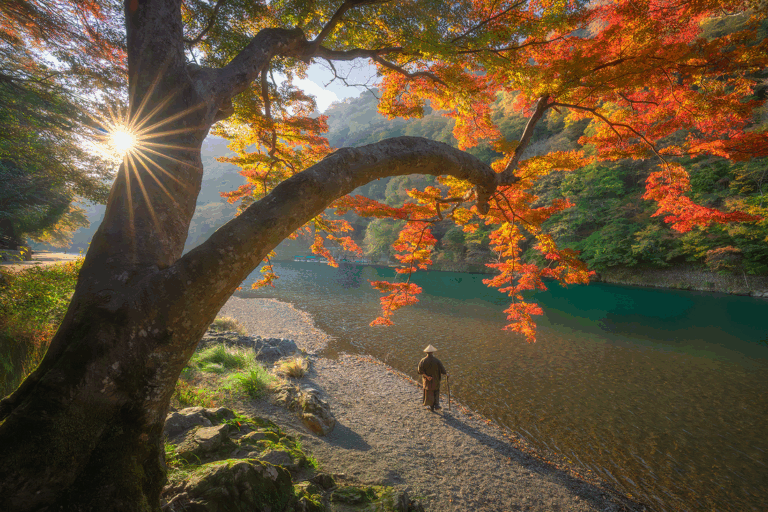
Discovering Churches in Slovenia: Where Steeples and Landscapes Meet
Nestled between the Alps and Adriatic, Slovenia is a small country that packs a ‘photographic punch’. For landscape photographers, it offers a remarkably rich canvas; from dramatic mountains, mirror-like lakes, and rolling hills, to misty valleys, lush forests, and pristine rivers of aquamarine glacial runoff.
Dotted amongst these natural wonders stand a series of manmade structures. Slovenia’s numerous churches are quiet, timeless landmarks that seem so perfectly situated, their placement could have been chosen with the landscape photographer in mind. Perched high on grassy ridges or nestled within alpine meadows, they provide ready-made focal points. At their best when emerging from soft dawn mists or catching the last warm glow of evening light, their simplicity and positioning within the landscape gives them a unique photographic presence.
While Slovenia has enough churches to visit one daily for nearly a decade, here are five of the most iconic and rewarding for the landscape photographer.
Our Top 5 Churches to Visit in Slovenia for Photography
1: St. Thomas Church (nr Škofja Loka)
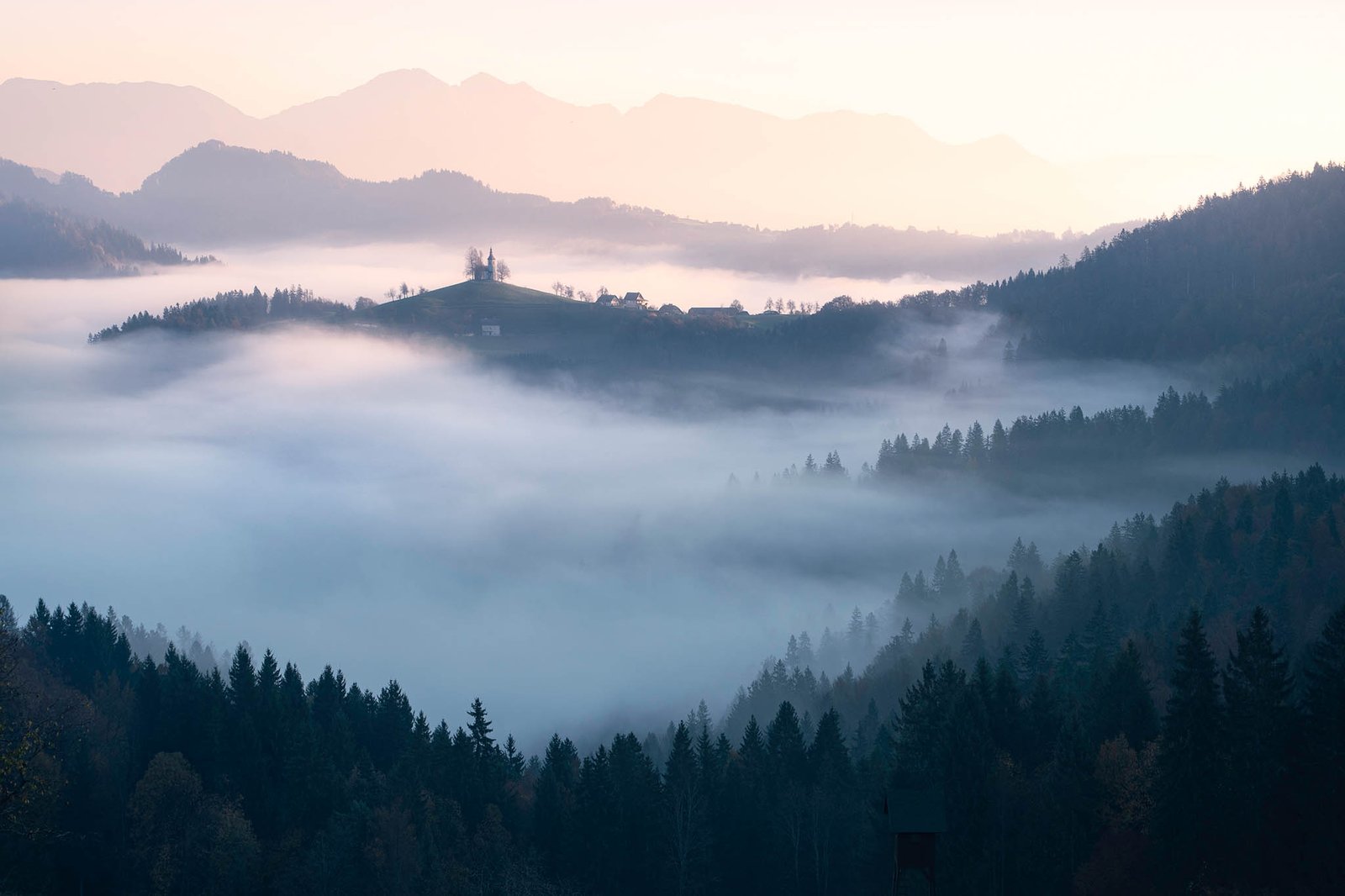
There are few locations that capture the spirit of Slovenia like St. Thomas Church. Sat atop a hill near the town of Škofja Loka, this little white church commands sweeping views across the valley, while the Kamnik–Savinja Alps rise in the distance providing a rugged backdrop to this pastoral scene. When morning mists sweep through the valley, the scene feels almost too perfect to be real – the church floating motionlessly above a sea of white.
The church is normally shot from a vantage point about a mile away, and this separation reveals layer upon layer of hills and peaks, creating a real sense of depth in the scene. Whilst each season has something to offer, autumn is prime photography season with a greater chance of morning mists and the opportunity to contrast the warm rustic colours of Slovenia’s never-ending forests with mountains dusted in early snows.
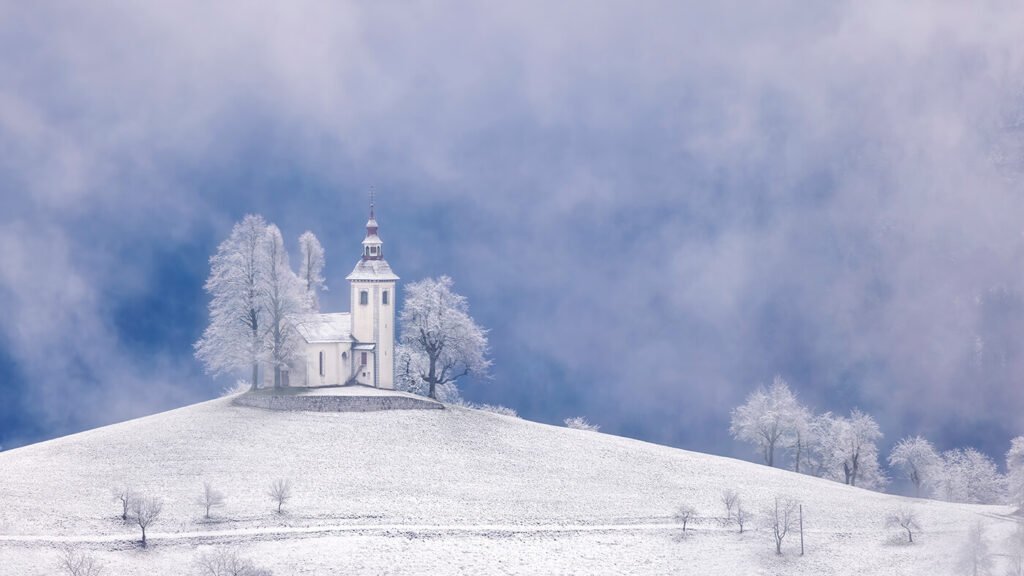
2: Church of St. Primus and Felician (Jamnik)
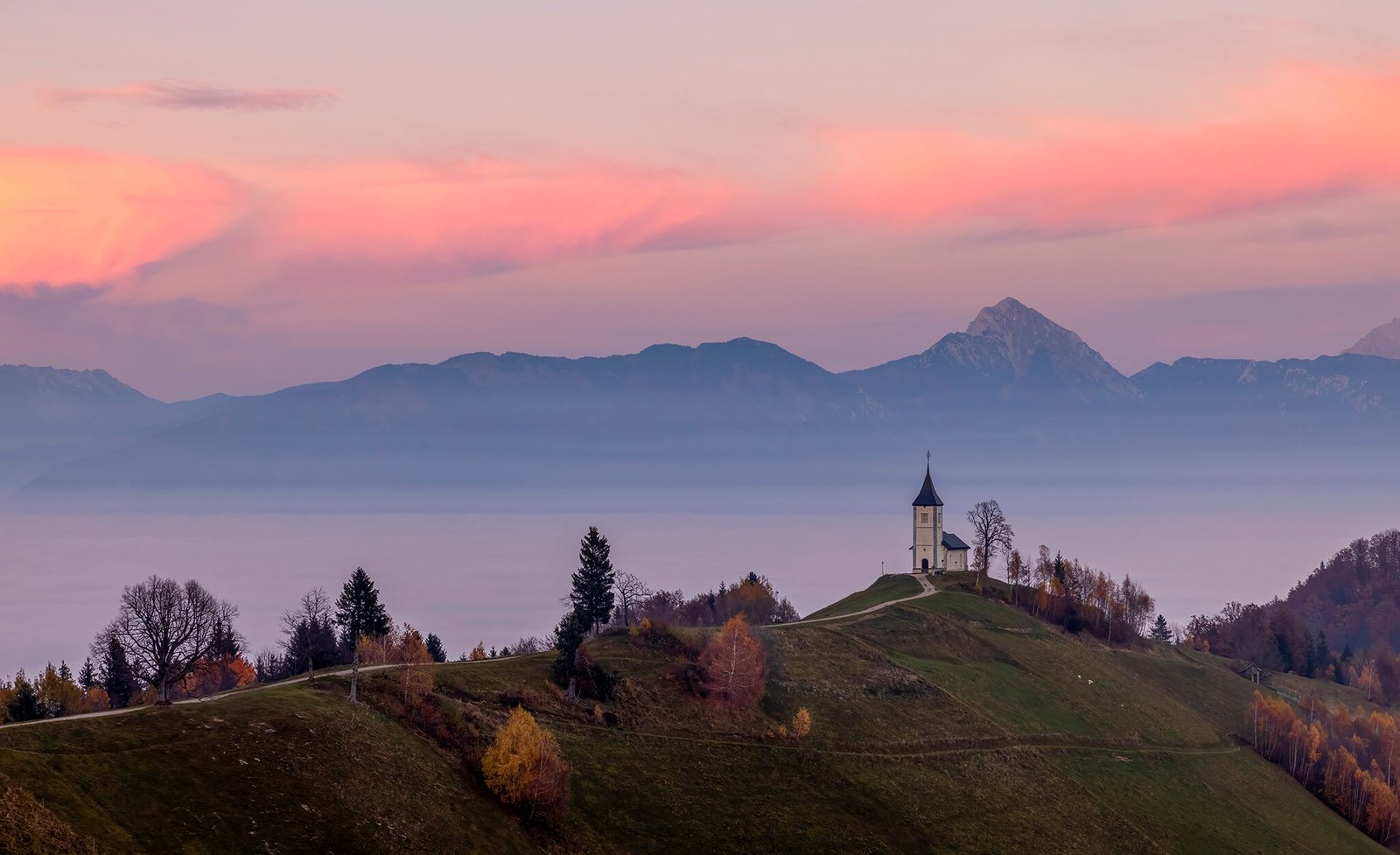
Jamnik is the quintessential Slovenian postcard scene: a narrow grassy ridge, a winding path that snakes its way to a perfectly positioned church, all backdropped by the dramatic silhouette of the Julian Alps. Along with Lake Bled, it attracts photographers from around the world, and for good reason – everything about Jamnik invites a strong, story-driven composition. The site is also full of history, with the hill housing a church since the 14th century and serving as a strategic lookout point in the 15th century, with warning fires lit during Ottoman incursions into the region.
Suiting both sunrise and sunset beautifully, the changing light offers distinct moods and compositional opportunities from different vantage points. Perched on a narrow spine of land, the ridge drops away steeply on both sides, creating a dramatic sense of height and solitude. The winding path that snakes along the ridgeline church wards, faces east and is ideal for capturing the first light of day, while the broader views overlooking the ridge take on a warm, golden glow at sunset, as does the church.
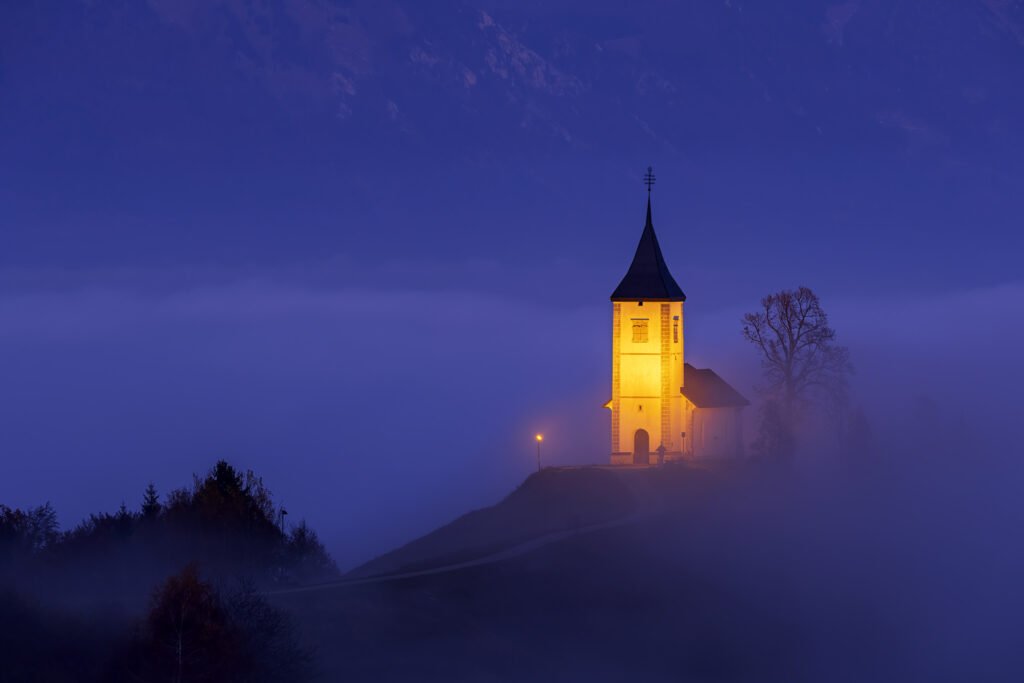
3: Church of St. John the Baptist (Lake Bohinj)
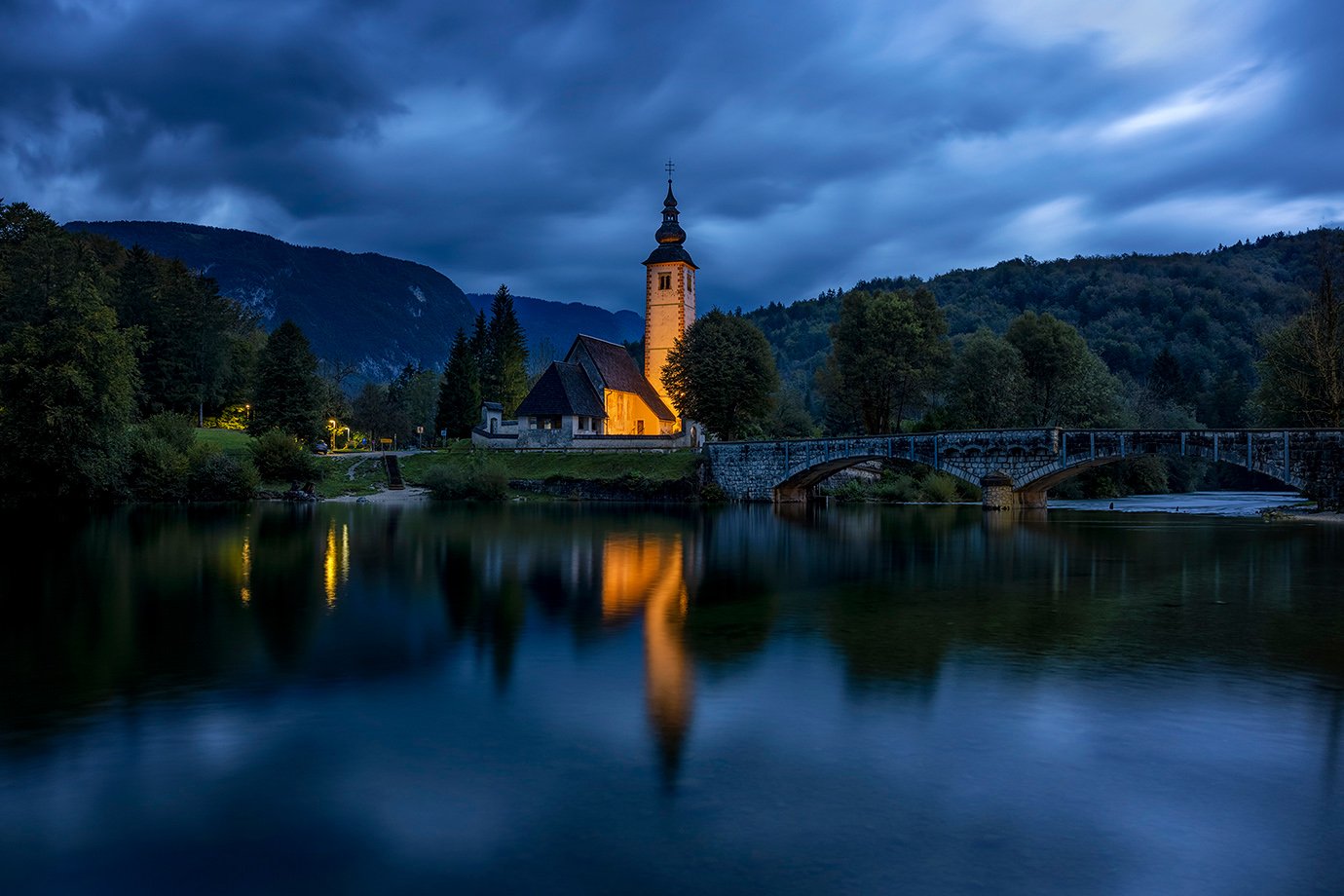
In the quieter, wilder reaches of Triglav National Park, Lake Bohinj offers a more tranquil alternative to Bled. Framed by forests and mountains, and reflected in clear waters, the stone-arched bridge and rustic church create a timeless scene that is the perfect location for those looking for a more peaceful experience.
As is often the case in Slovenia, autumnal mornings are especially beautiful here, with a reflected kaleidoscope of colour dancing along the far shoreline. While the church and bridge are key focal points, the lake offers much more. Numerous trails allow for exploration, with misty mountain views, reflected woodlands and tranquil corners that reward a more meditative approach to landscape photography. Lake Bohinj is a location where ‘less is often more’.
4: St. Volbenka Church (Na Logu)
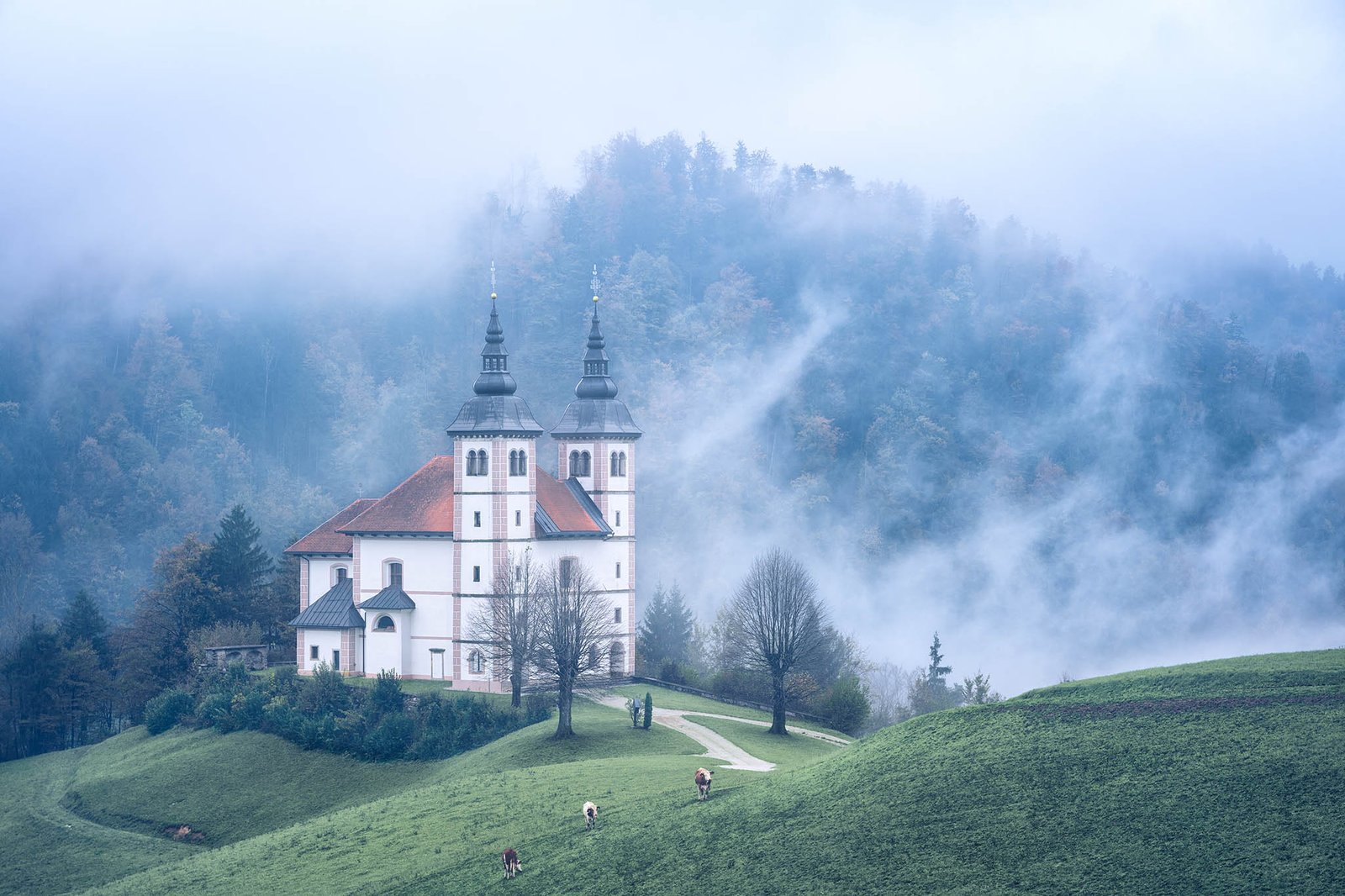
Lesser known but equally photogenic, the Church of St. Volbenka is tucked into the gentle hills of south-eastern Slovenia. Sporting two towers, the church offers something a little different; while double-towered churches exist in urban centres, such as Ljubljana Cathedral, it’s far rarer to find one in a rural, hilltop setting. This unique feature makes St. Volbenka visually distinctive and photographically compelling, and worthy of a detour.
The church can be photographed up close, using the symmetry of the towers for strong, balanced compositions, or from a distance. Shooting from the main road allows for the inclusion of the winding approach and the surrounding patchwork of forested hills, offering context and a sense of story to the composition.
5: Church of the Assumption (Lake Bled)
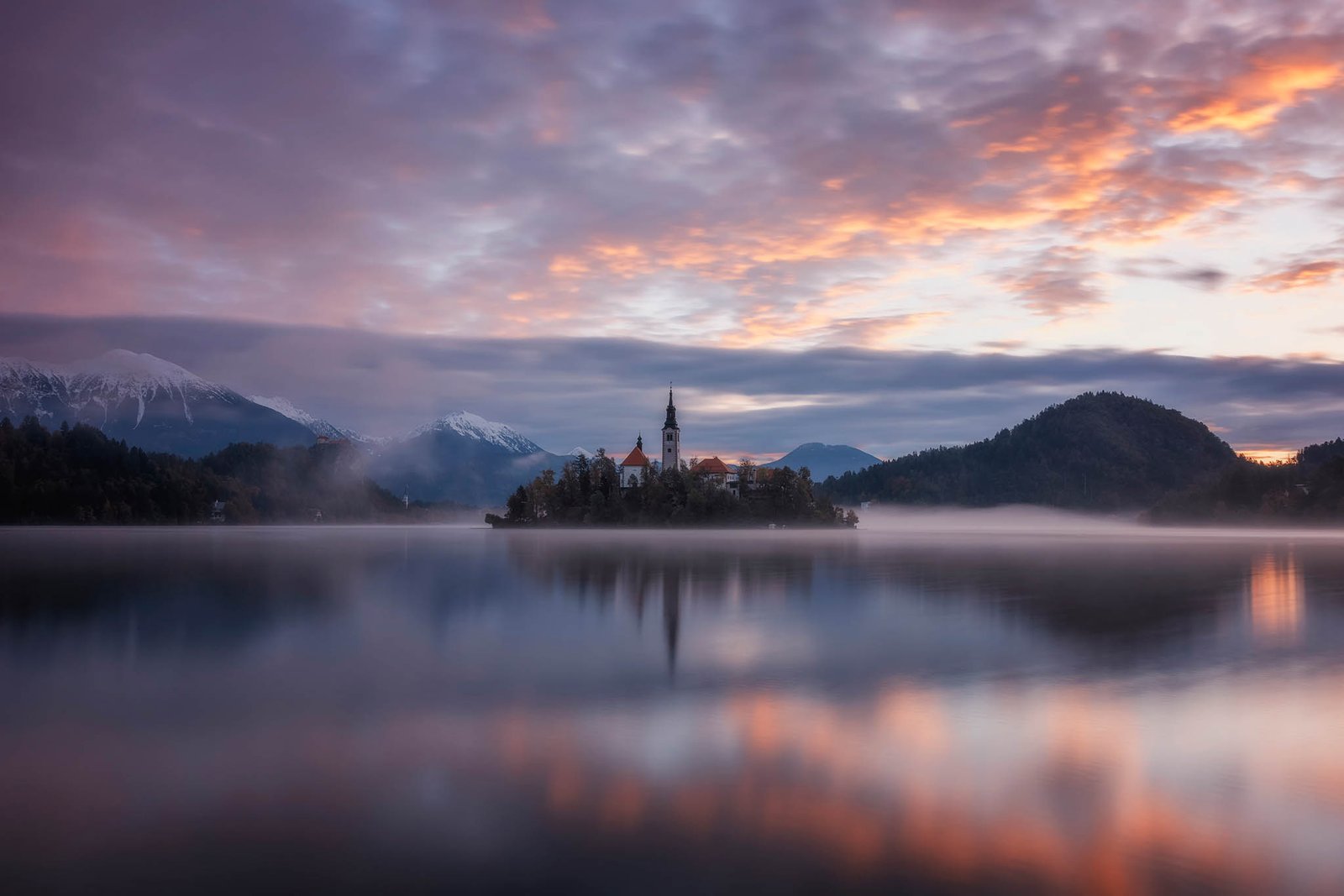
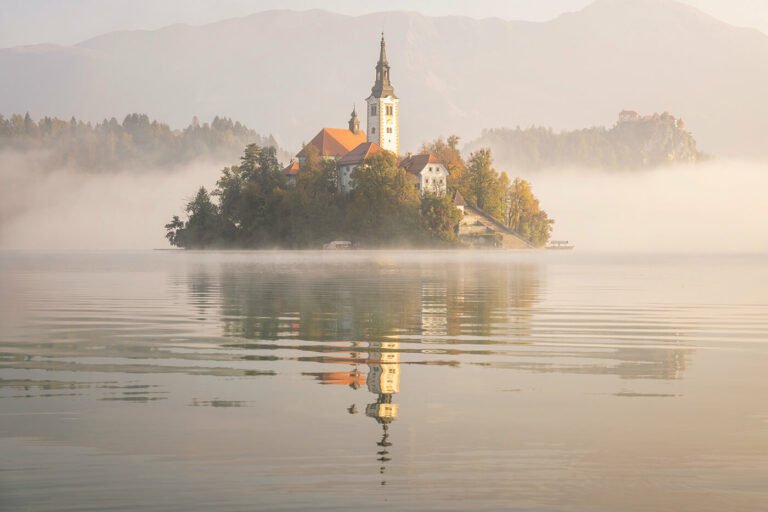
Lake Bled needs no introduction. Its central island and church are among the most photographed scenes in Europe and look every bit like they’ve been plucked from a fairy-tale story – it is a location that never fails to inspire. Whether viewed from the high vantage point at Mala Osojnica, reflected in still waters at dawn, framed by autumn foliage, or emerging from swirling mists, the Church of the Assumption and Island are endlessly versatile and visually rewarding.
The church’s striking contrast of red tiled roof and white walls, slender tower and symmetrical island setting, work beautifully in both wide landscape frames and tighter, more detailed compositions. Lake Bled is also an excellent location for drone photography. An aerial perspective provides opportunities to capture the island in all its glory, reflections shimmering, and mountainous backdrop from a more unique angle that showcases the timeless, storybook charm of this iconic setting.
Once finished, the most essential part of any Bled visit, a slice of the legendary Bled cream cake. Rich and flaky, and thoroughly deserved after a morning of photography!
Slovenia in full view
These churches represent more than just photogenic spots; they reflect the harmony between Slovenia’s cultural heritage, a heritage the Slovenes are extremely proud of, and its natural landscape. Capturing them is more than ticking off iconic locations; it’s about watching the light unfold, experiencing the moment and returning home with images that convey real atmosphere and emotion.
However, Slovenia has much to offer beyond its evocative churches and is arguably one of most picturesque countries in Europe. Gorges, waterfalls, forested valleys, high mountain passes, and sleepy villages are just some of the visual delights on offer. The churches though, are the punctuation marks in the landscape, the scenes that encourage photographers to return time and again.
A church should be a prayer in stone- simple, humble, and one with its landscape