Japan’s Winter Wonderland
Known for some of the heaviest snowfalls on Earth, Hokkaido’s wide-open landscapes and quiet rural towns are transformed into a minimalist photographer’s paradise. Stark winters blanket every hill, river, and village in pristine white, the low sun casts long delicate shadows, frosted trees glow in soft light, and frozen lakes gently reflect pastel skies.
Photographing Hokkaido whilst it’s shrouded in a snowy blanket is more than just photographing iconic locations; it’s about the experience, about capturing the essence of winter – its minimalism, texture, and atmosphere, all wrapped in a bundle of serenity.
This article explores how to see, frame and capture Hokkaido in its most magical season, while offering practical insights to elevate winter photography.
How Snow and Cold Shape the Scene
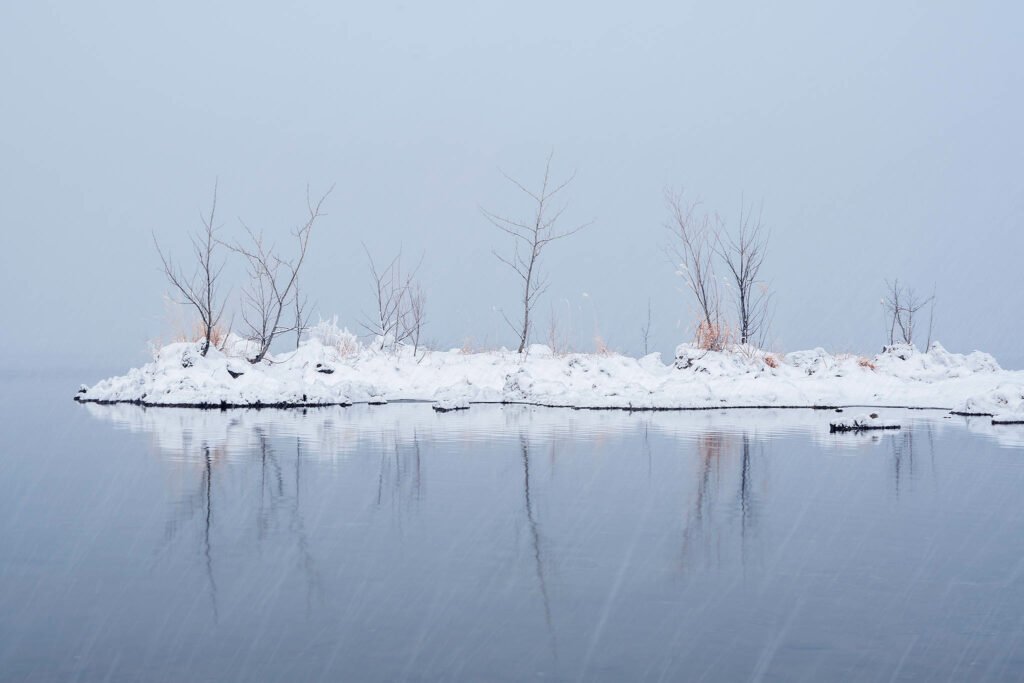
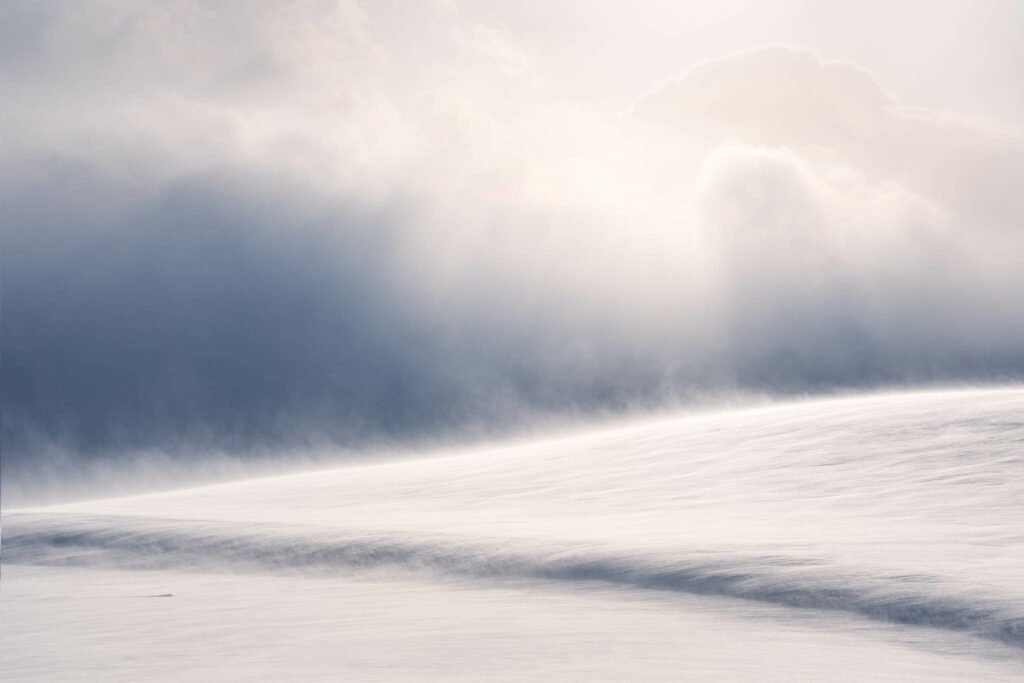
Whilst many photographic locations are blessed with snow, and in many cases popular because of it, a wintery Hokkaido offers something distinct: a natural playground for minimalism and mood. Here, the deep cold and relentless snow don’t just decorate the landscape, but fundamentally reshape it, reducing it to graphic essentials. Hokkaido’s famously dry, powdery snow, driven by Siberian winds, settles in soft blankets, erasing clutter and creating expansive negative space. This natural decluttering of the scene allows the photographer to compose with clarity and intention without the need to wrangle with undesired distractions.
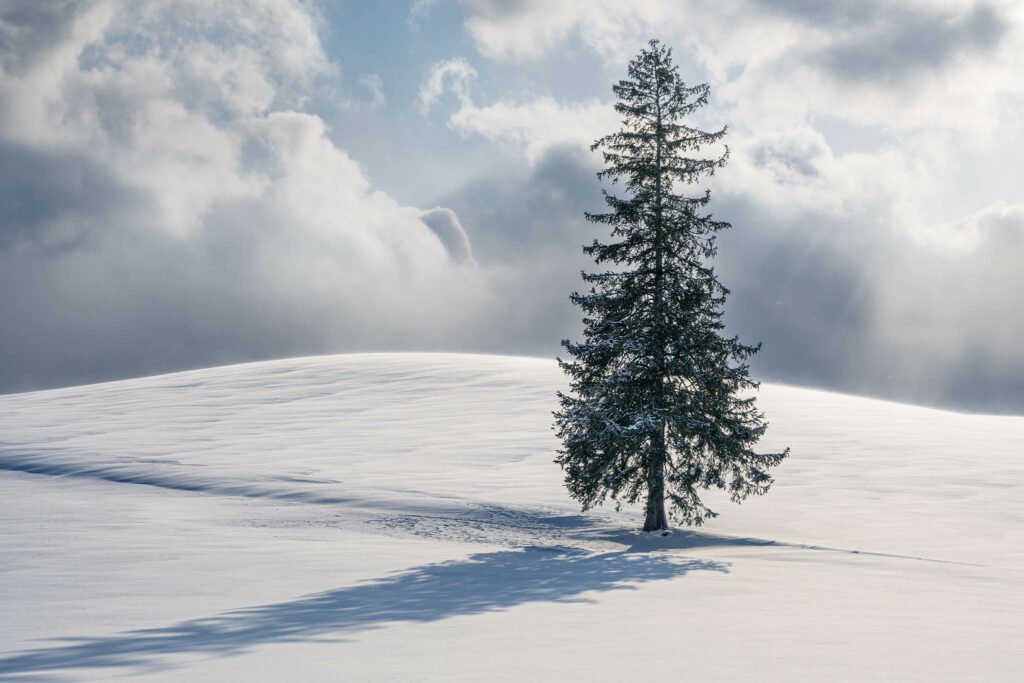
Here, familiar subjects are transformed. A lone tree is no longer just a tree, becoming a singular point of contrast against an endless snowfield. A frozen lake becomes a vast, textured plain reflecting soft sky or holding geometric cracks and bubbles. The low-angled sun, never rising particularly high in the sky, stretches shadows and paints the landscape with golden warmth or cool blue tones.
The Art of Subtraction
Texture as a Key Component
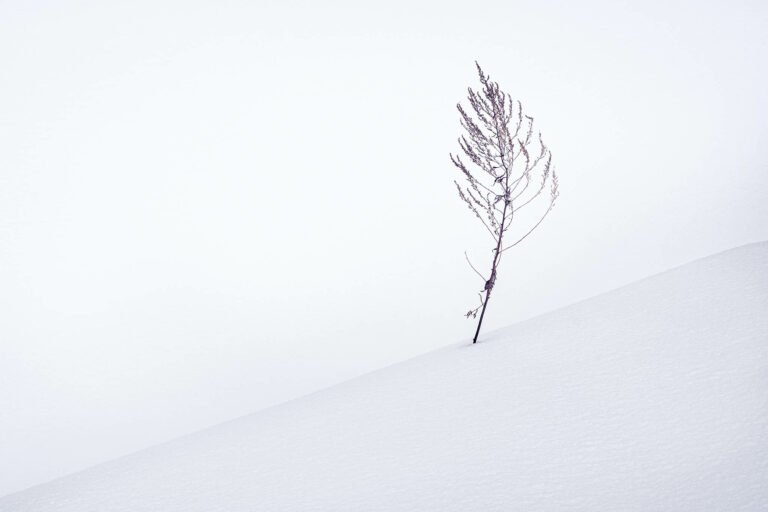
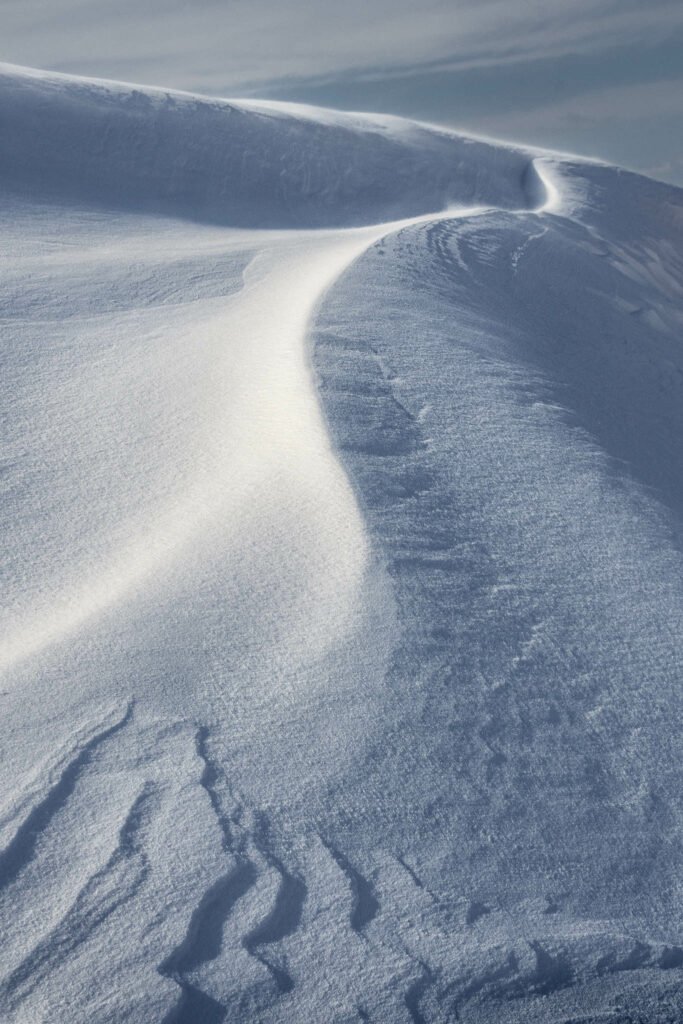
In this near monochromatic world, texture becomes a key compositional consideration. Wind-etched patterns (sastrugi) stretching across the snowy landscape, delicate frost feathers on branches, or the solitary tracks of wildlife become compelling subjects. These textured details add depth, detail, and a narrative to minimalist frames, breaking up the snow’s uniformity.
Follow Nature’s Leading Lines
Witness Colour as an Event
Understanding how winter changes perception allows you to see Hokkaido not just as a location, but as a photographic canvas shaped by the elements themselves.
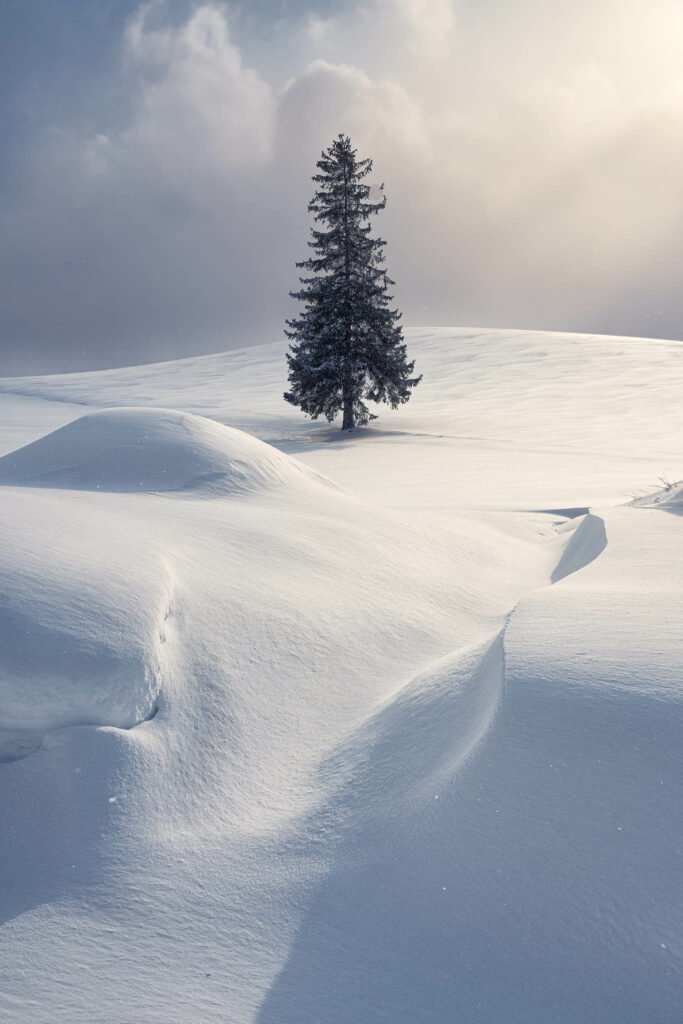
“a lone tree standing in the middle of a vast snowfield … like a work of art created by nature.”
Mastering the Technical Winter: Gear, Exposure, and Light
The very elements that make Hokkaido a visual wonderland, also present specific technical challenges. The camera’s meter is easily fooled by expansive bright snow, often resulting in dull, grey, underexposed images. Autofocus can struggle, often hunting in the low-contrast, monochromatic haze, while the extreme cold will rapidly drain batteries and risk condensation when moving between temperatures. However, mastering these hurdles is part of the journey, and a few key strategies can help capture this pristine beauty as it’s seen.
Photographer's Tips
Exposure
Focusing
White Balance
Shutter Speeds
Lens Choice as a Creative Tool
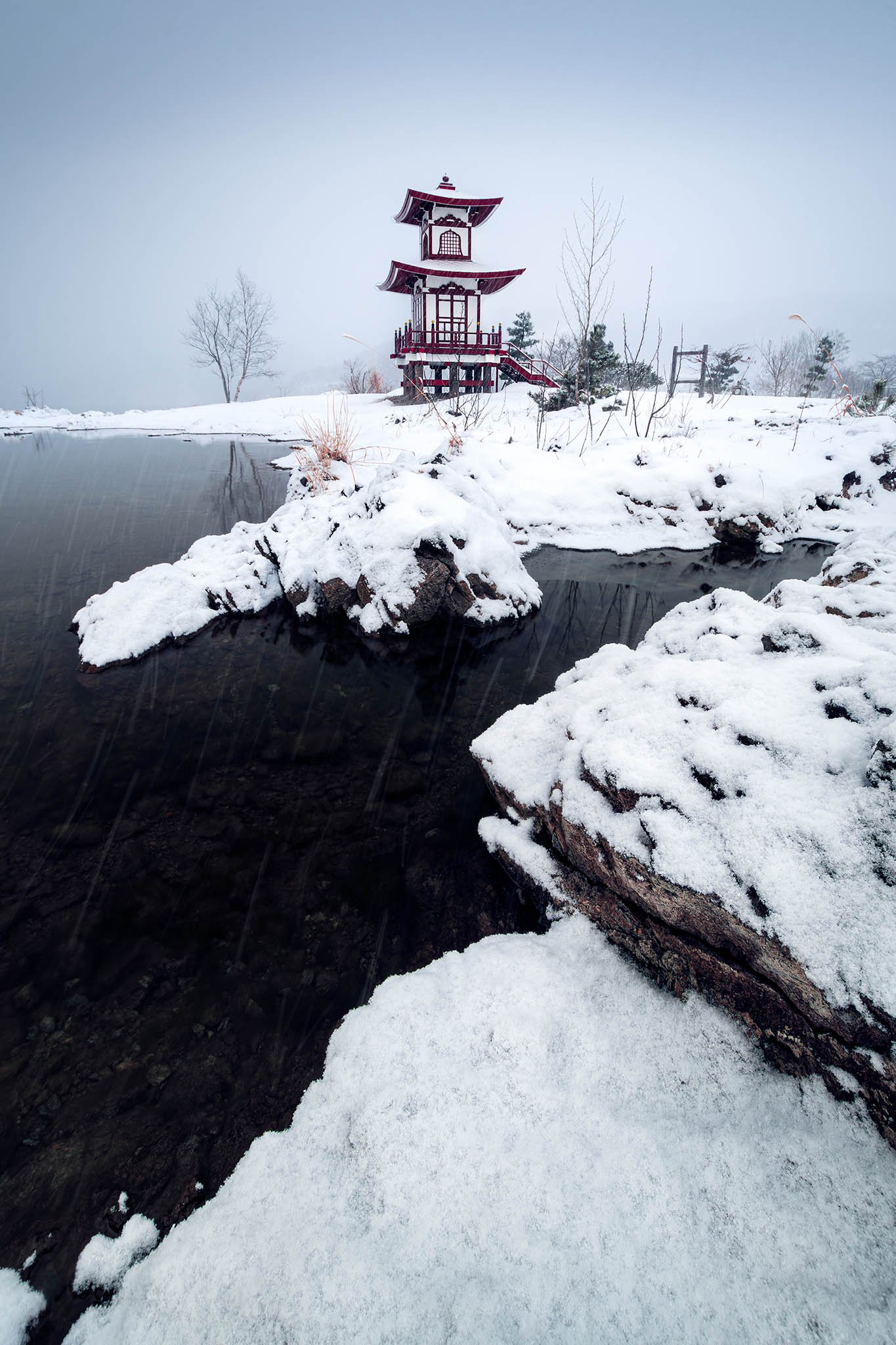
Lens choice in Hokkaido is less about gear and more about how each focal length frames the story and mood of the scene. Lenses can simplify, abstract, or immerse the viewer within the minimalist beauty of the scene.
– Telephoto lenses are excellent for isolating small subjects, a lone tree, a distant fox, or layers of rolling hills. Their natural compression emphasises patterns, shapes, and form, turning ordinary elements into striking graphic elements.
– Mid-range lenses allow for tighter storytelling compositions, particularly when incorporating subtle foreground textures such as wind-carved snow or delicate frost. These lenses balance detail and context, linking foreground elements to focal points deeper into the scene.
– Wide-angle lenses, excel at showcasing the vast expanse. Negative space becomes a dominant and expressive element, allowing the landscape’s scale to envelop the viewer.
Framing the Silence | Winter Compositions
To capture the true winter spirit, and convey its silence and beauty, these classic compositions offer a variety of ways to frame the serene beauty of Hokkaido.
Leading Lines
Leading lines are one of photography’s most powerful and accessible tools for guiding a viewer’s eye. In Hokkaido’s winter, these lines become elegantly pronounced, and can be straight, curved, or even implied through a series of elements such as distant trees creating a natural pathway into and around the scene.
Use these lines intentionally to build depth and narrative within the scene. A diagonal line can add dynamism, pulling the eye from the foreground into the misty distance while curved lines introduce a gentle, flowing rhythm. The key is to ensure they lead into the frame, toward the subject or an area of interest; they should anchor the viewer within the story rather than pulling their gaze away from it.
The Power of Negative Space
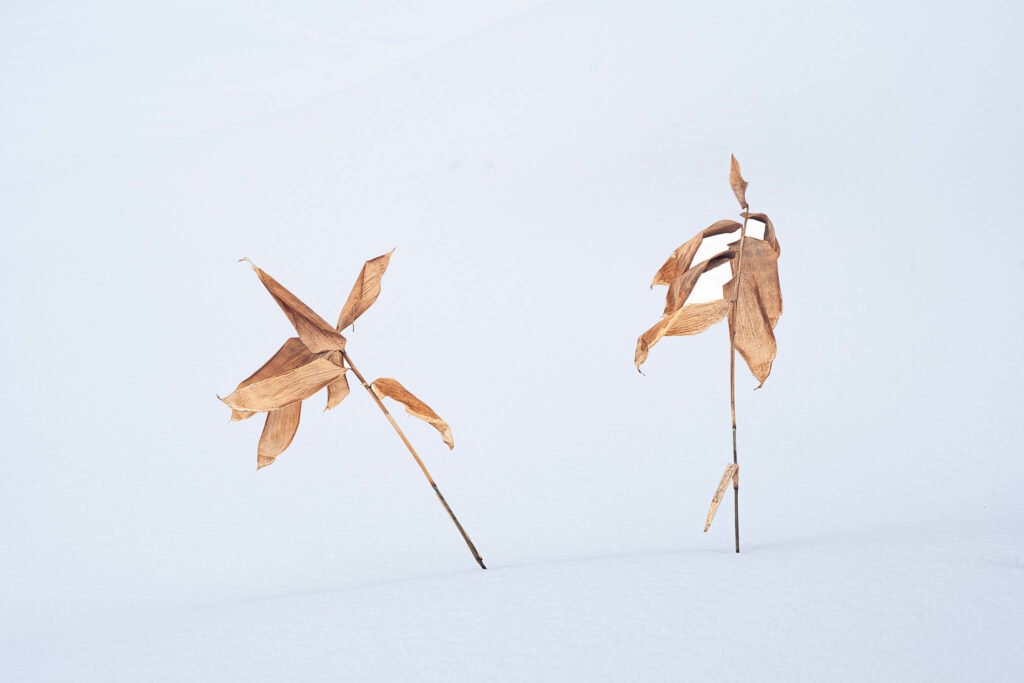
In minimalist photography, the intentional use of emptiness, or negative space, is a powerful tool that places full emphasis on the subject; in Hokkaido, the snow itself dominates and provides the perfect canvas. By positioning a small, compelling subject like a lone tree, a solitary rock, or a distant building slightly off-centre, or on the rule of thirds intersections, you create a visual stopping point. The surrounding expanse of white doesn’t just frame the subject, it emphasises it, conveying a sense of isolation, tranquillity, and scale.
Whenever possible, position the main subject so it faces into the scene, not out of it; having it looking into the frame creates a more balanced and engaging image.
Graphic Contrast
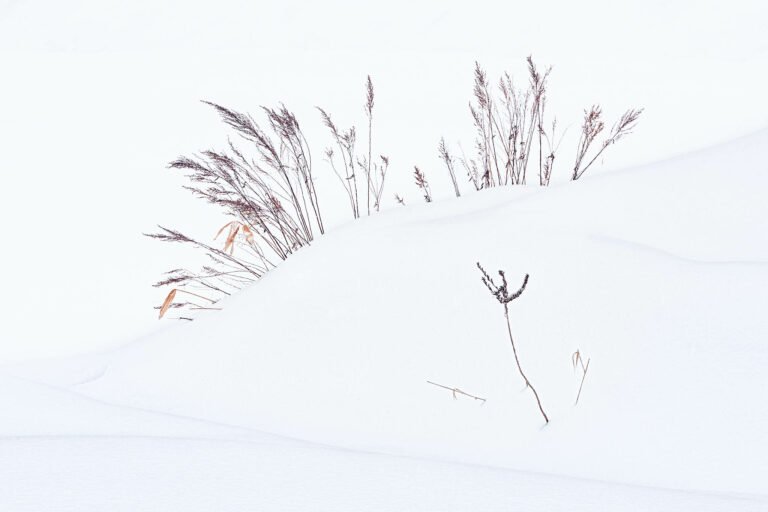
Seek out graphic contrasts such as the elegant streaks of dark, skeletal trees against a blank white backdrop, or the stark angular shapes of a lone building emerging from a snowdrift. A single bare tree can make a statement of resilience against the elements. The goal is to find compositions where the dark elements are essential shapes that give the emptiness meaning and structure.
Silhouettes
Use low, directional light to show trees, fences, or houses as crisp, dark shapes against a brighter sky or snowfield.
Textural Variety
Contrast the rough, intricate bark of a tree trunk with the soft featureless surface of fresh snow.
Architectural Lines
The sharp angles of a remote house, a lone telegraph pole, or the curves of a traditional village roof can create abstract forms when set against the snow’s simplicity. These human elements add narrative and mood to wide, pristine landscapes.
The Rule of Odds
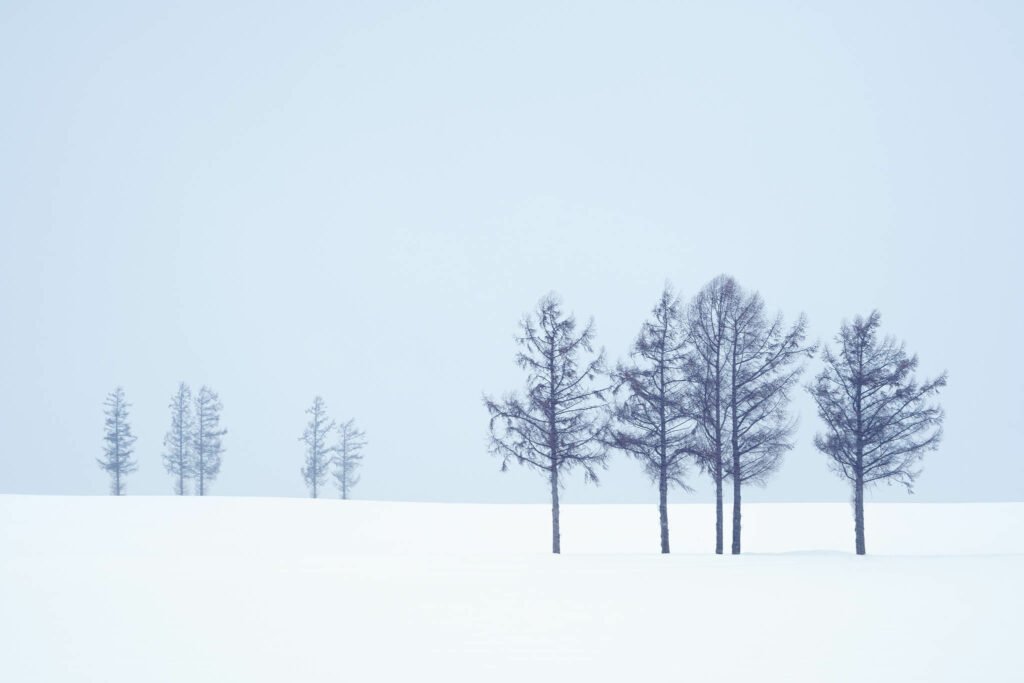
In Hokkaido’s snowy expanses, compositions with an odd number of elements often feel more dynamic and pleasing than those with even numbers. Our brains naturally work to pair objects, so an odd number of trees (for example), causes the brain to continue moving around the image attempting to pair up. This natural human trait creates a sense of movement as the eye navigates the scene, resulting in a more dynamic composition than a similar scene with even numbers would deliver.
The Moods of Winter Weather
Hokkaido’s winter mood shifts dramatically with the weather, offering a surprising range of visual options and compositional choices.
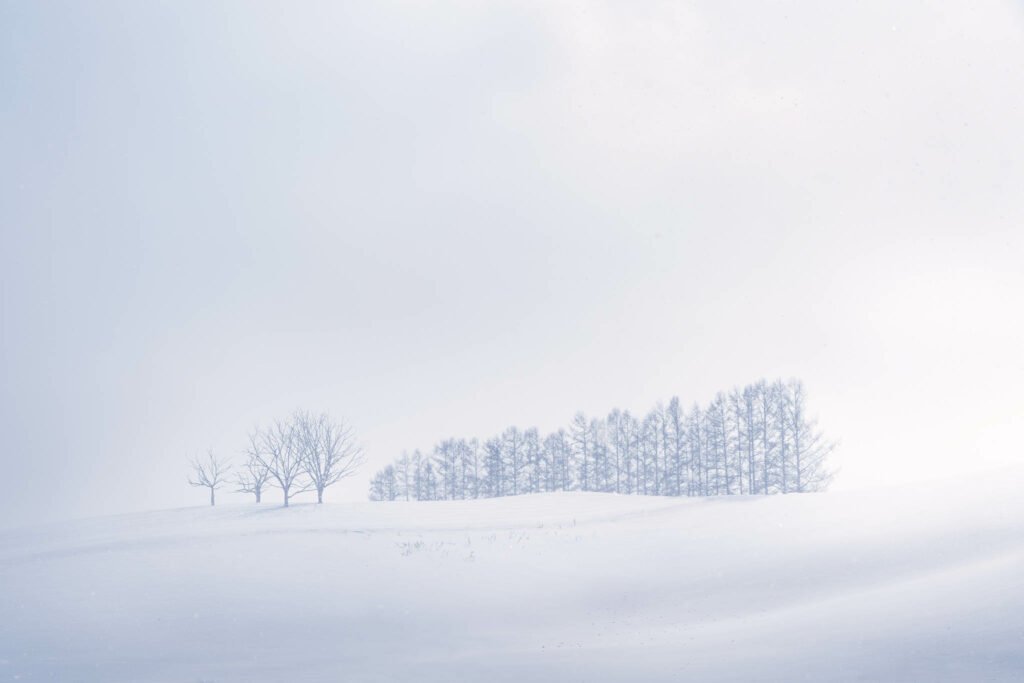
Heavy snowfall creates a soft, muted world where any sign of sharpness is lost, and subjects take on a ‘sketched look’ – perfect for high-key minimalism. Longer exposures, from 1/4th to 1 second, blur falling snow leaving a gentle softness to the scene.
Light flurries add a sense of movement and texture, giving scenes a gentle dynamism. Captured at quicker shutter speeds, around 1/250th of a second, falling snow streaks across the frame, adding life and energy to the landscape.
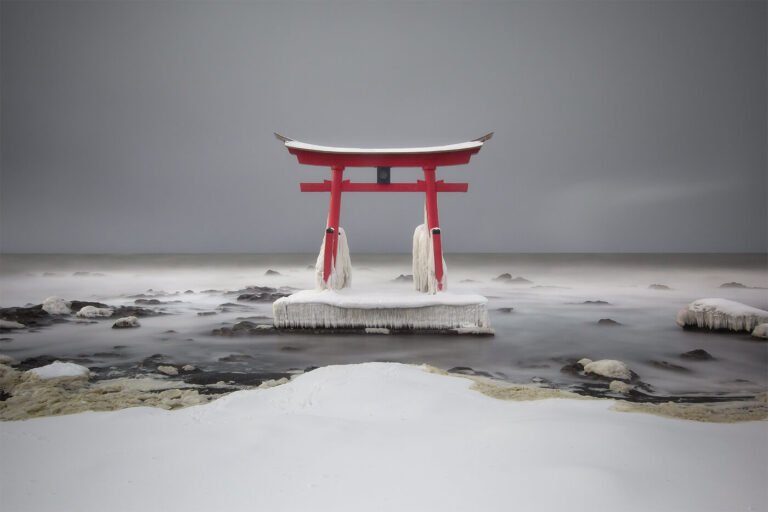
Fog and mist, especially near the coast, envelop subjects in atmospheric layers and reduce the landscape to pure shape and tone. Composing in these conditions allows for minimalistic scenes where clutter disappears and the sea blends seamlessly into the sky, creating a dreamy mood.
Clear, crisp days, bring drama as light carves strong shadows and emphasises the geometry of trees, buildings, and snowdrifts. Ideal conditions for compositions that focus on shape, contrast, and the interplay of light and shadow.
Hidden Wildlife
While the landscape is a masterclass in minimalism, Hokkaido’s wildlife adds another dimension to the snow-covered scenery. Iconic creatures like the stately red-crowned crane, the curious Ezo fox, or the majestic Steller’s sea eagle become striking compositional elements against the boundless white. A crane’s elegant courtship dance or a lone fox crossing fresh snow offers instant visual tension and introduces scale and motion to the minimalist landscape.
Whether captured as an intimate portrait or as a small, resilient figure in a vast snowy scene, Hokkaido’s wildlife adds a layer of powerful narrative to any winter portfolio, evoking feelings of isolation, and survival.
Experiencing Hokkaido Through the Lens
Hokkaido in winter is more than a destination, it’s a photographic experience. Snow simplifies every scene, offering lessons in minimalism, texture, and light. It encourages a change of photographic pace where negative space becomes a powerful compositional tool; a single tree, or small cluster of trees, enveloped in a sea of swirling snow creating its own drama and impact without the need for cluttered compositions.
It offers endless possibilities for those ready to embrace the season, but its appeal goes beyond photography. The people of Hokkaido are polite, humble, and welcoming, the culture and history rich with interest, and the food…simply incredible. It’s a place that rewards the photographer not only with images, but with an unforgettable experience.